Console Prices in 2026: What Changed and What It Means for PC Buyers
Xbox announced a worldwide 2026 console price update, while PlayStation pricing changed in several Southeast Asian markets. Here is what higher console prices change for buyers comparing a compact PC.
Last verified: July 9, 2026.
For a long time, the easy console argument was price. Buy one box, connect it to a TV, and get years of gaming for less than a comparable desktop PC.
That argument still has weight. Consoles are simple, consistent, and especially good for a family TV. But the price gap is no longer something buyers should assume. Recent manufacturer updates make the total cost and long-term flexibility worth a closer look.
Xbox announced a worldwide price update
On June 25, 2026, Xbox announced that console prices would increase worldwide beginning August 1. The update says 512 GB models increase by $100 and 1 TB models by $150, while the 2 TB model is being discontinued. Xbox cited sharply higher storage and memory costs.
That is a meaningful change because fixed console hardware was once seen as insulated from the component pricing that moves the PC market. The same supply pressure now shows up in the living-room box too.
PlayStation pricing also changed in specific markets
PlayStation announced new recommended prices effective May 1, 2026 for PS5, PS5 Digital Edition, and PS5 Pro in several Southeast Asian markets, including Singapore, Malaysia, Thailand, Indonesia, the Philippines, and Vietnam. Sony had also raised PS5 pricing in Europe, Australia, and New Zealand in 2025.
The exact price a buyer sees still depends on market, retailer, bundle, and stock. The point is not that every console costs the same everywhere. The point is that the old assumption - console hardware only gets cheaper over time - is no longer dependable.
Switch 2 shows a higher baseline too
Nintendo's Switch 2 launched June 5, 2025 at a $449.99 U.S. MSRP, or $499.99 with Mario Kart World. It is a different kind of device than a PS5 or Xbox, but it reinforces the broader point: newer gaming hardware is being introduced at higher price points than many buyers expect from a console.
None of this makes a console a bad purchase. A console can still be the right answer when the priority is a predictable TV experience with almost no setup.
What higher prices change in the comparison
As the starting price rises, buyers should look beyond the price tag on day one.
- How much storage is included?
- Can a failed fan, drive, or power supply be replaced?
- Can the graphics hardware change later?
- Does the machine give the buyer a choice of stores and operating systems?
- Will the game library make sense on the next device they buy?
A console is deliberately fixed. That simplicity is real value. But the more a fixed box costs, the more reasonable it is to ask what the buyer can repair, change, or carry forward.
Where Raster Zero makes a different case
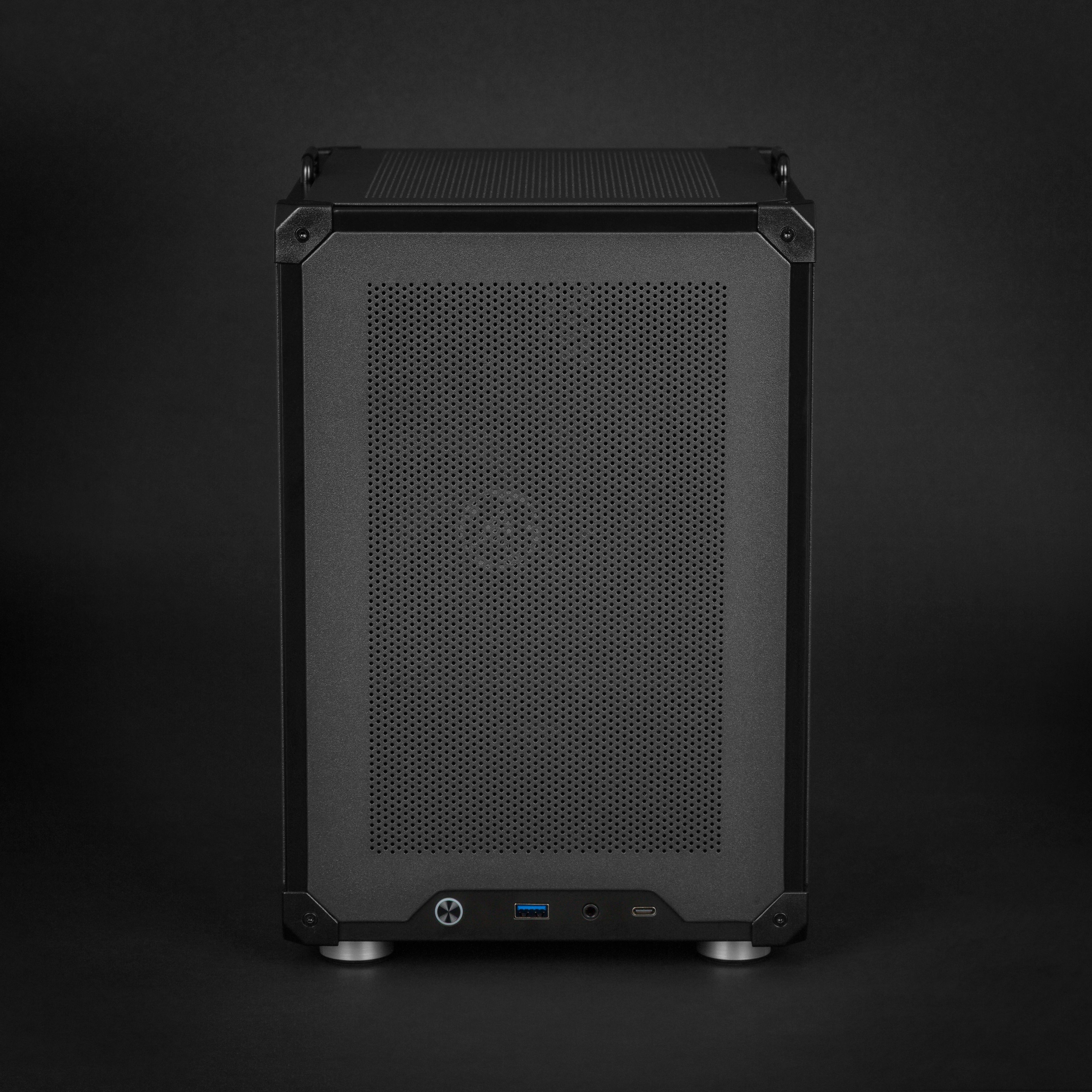
Raster Zero is not trying to be a console with a different logo. It is built for the person who wants a compact system near a TV or on a desk, but does not want the next five years of gaming tied to one fixed set of hardware.
The chassis is a compact micro-ATX desktop, not a proprietary appliance. That means compatible memory, storage, cooling, power supply, motherboard, and graphics components can be serviced or upgraded over time. AMD configurations are built for SteamOS and include setup guidance, while Windows remains an option on the same standard PC hardware.
A console is the better buy when the easiest possible living-room experience matters more than changing the hardware later. Raster Zero is the better fit when a buyer wants the compact footprint plus the ability to repair, upgrade, and choose how they play.
Next: Gaming PC vs Console in 2026: The Long-Term Value Question.