Gaming PC vs Console in 2026: Which Is the Better Long-Term Buy?
Consoles remain the easiest living-room option. A compact gaming PC can be the better long-term purchase when upgradeability, store choice, repairability, and a portable library matter more.
The honest answer is that a console is still the better choice for some people.
If the goal is one controller, one TV, one store, and as little setup as possible, a console remains hard to beat. It is a focused appliance. That is the appeal.
A gaming PC is a different kind of purchase. It asks for more decision-making at the start, then gives the owner more say over the hardware, the operating system, the game store, and the next upgrade. The better long-term buy depends on which side of that tradeoff matters more to you.
Choose a console when simplicity is the point
A console is likely the right call when these are the priorities:
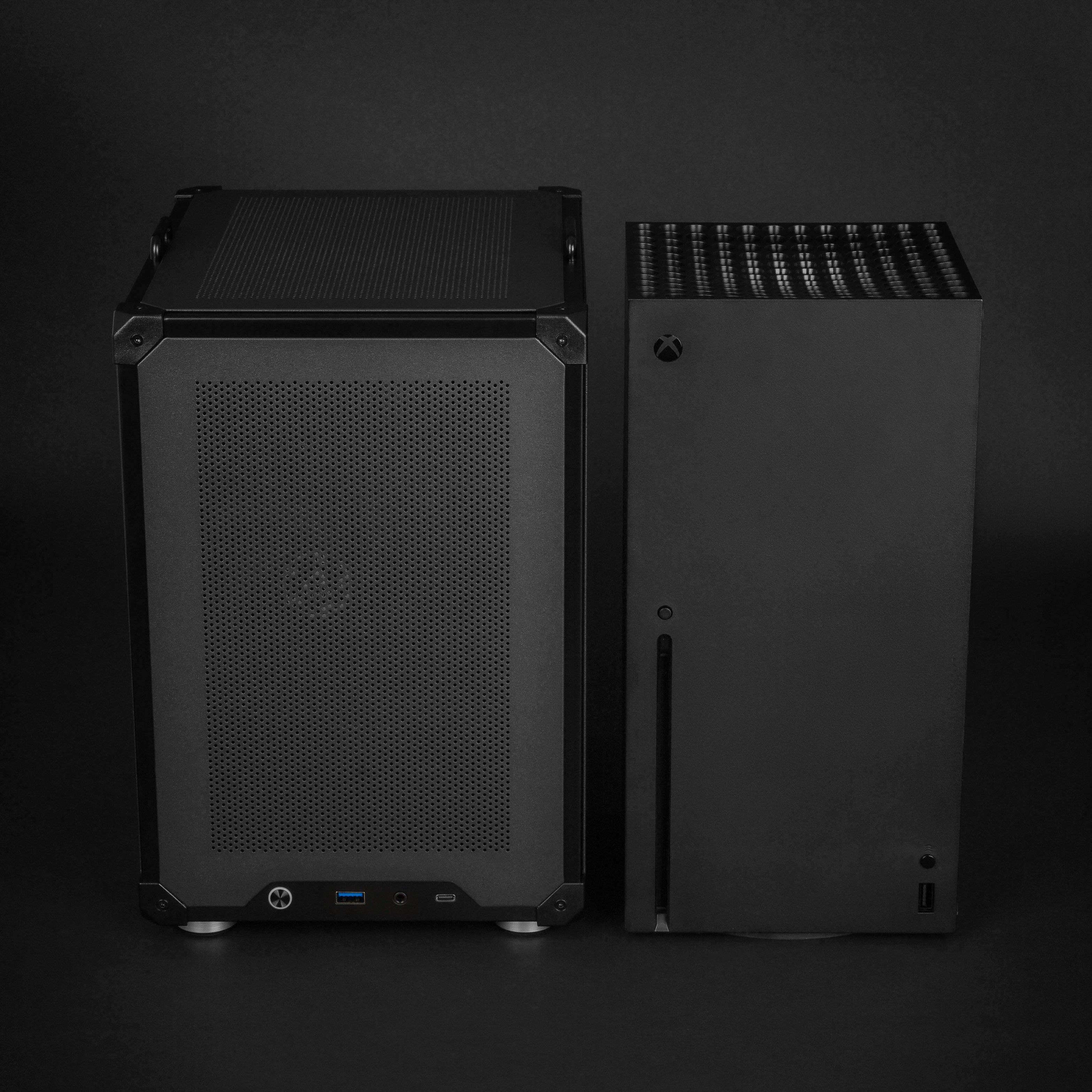
- Turn it on, wake the TV, and play with minimal setup.
- Use one platform's store, social features, and subscriptions.
- Avoid comparing PC parts, compatibility, or graphics settings.
- Buy a fixed box and keep it unchanged for the generation.
There is nothing lesser about that choice. A console is built to remove decisions. The hardware and software are designed together, so the living-room experience is usually consistent.
Choose a PC when ownership flexibility matters more
A desktop gaming PC makes more sense when you care about what happens after the initial purchase:
- You want to add storage instead of deleting games.
- You want to replace a fan or a graphics card instead of replacing the whole system.
- You want access to more than one PC game store.
- You already own PC games or want the same library on a desk, TV, laptop, or handheld PC.
- You want the option to use Windows or a SteamOS AMD configuration.
That is not an argument that every PC upgrade is cheap or necessary. It is an argument that the owner gets a choice. A fixed console is convenient because the decision is made for you. A PC is flexible because you can make a different decision later.
Long-term value is more than the first price
The first price is real, but it is only one part of the comparison. Over several years, buyers also pay for storage, games, accessories, repairs, and eventually a replacement box or an upgrade.
PC does not automatically win that math. A buyer who upgrades every component the moment something new arrives can spend far more than a console owner. The value appears when the owner uses the flexibility deliberately: add the drive they need, keep working parts, shop across stores, and upgrade only when a game or display actually demands it.
This is why a compact desktop deserves a separate category from a huge tower. Plenty of people want PC ownership without a large case under the desk.
Why Raster Zero exists
Raster Zero is our answer to that buyer. It keeps the physical footprint practical for a desk or living room, then uses standard desktop components rather than a sealed, proprietary design.
That means the machine can use a standard micro-ATX motherboard, desktop memory, M.2 storage, an ATX power supply, normal cooling parts, and a compatible desktop graphics card. The exact upgrade path still depends on fit, cooling, power, and future hardware requirements. But it starts with parts that can be serviced instead of a box that has to be replaced as one unit.
For someone who wants the absolute easiest television experience, buy the console. For someone who wants the compact shape but wants the machine, the game library, and the operating system to remain theirs to change, Raster Zero is the better long-term answer.
AMD Raster Zero configurations are built for SteamOS and include setup guidance.
Previously: Console Prices in 2026: What Changed. Next: Do PC Game Discounts Really Beat Console Sales?.